
Trigger Point Injection & Muscle Energy Release
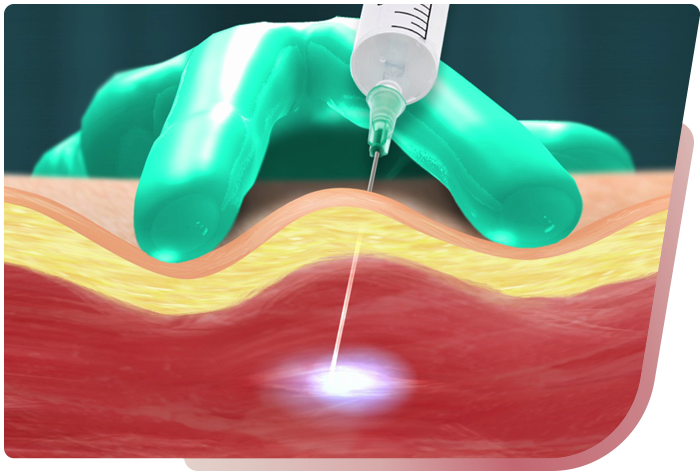
Myofascial trigger points are a common cause of muscle pain and dysfunction. They are often identified by sensitive points within the taut bands of skeletal muscle fibres. Understanding the clinical characteristics, reasons, and treatment methods is essential to manage this myofascial pain syndrome effectively.
What are the Myofascial Trigger Points?
A Myofascial trigger point is a hyperirritable spot within the taut band of muscle tissues or the associated fascia. These sensitive points are divided into two types,
Difference Between Normal and Affected Muscles
- Normal Muscles
- They don’t have any trigger points
- No taut bands of muscle fibres
- Absence of tenderness
- No pain patterns
- No twitch or prick when applied pressure
- Affected Muscles
- Have more than one trigger points
- Chance of taut bands of muscle fibres
- Presence of tenderness
- Has pain patterns
- Twitch or prick happens when pressure is applied
Treatment Methods for Myofascial Trigger Points
Injection Therapy
Injecting 0.2-1.0ml of 1% local anaesthetic into the taut bands alleviates or deactivates the trigger points.
Dry Needling
After anaesthetising the taut bands, gentle dry needling can disrupt the abnormal muscle bands and start healing.
After anaesthetising the taut bands, gentle dry needling can disrupt the abnormal muscle bands and start healing.
Stretching Techniques
The affected muscle is stretched to release the trigger point. Specific techniques, like muscle energy release, involve a contraction cycle and cause relaxation to normalise the muscle. This is very effective when partnered with the temporary inactivation of trigger points with the help of anaesthetic injections.
The affected muscle is stretched to release the trigger point. Specific techniques, like muscle energy release, involve a contraction cycle and cause relaxation to normalise the muscle. This is very effective when partnered with the temporary inactivation of trigger points with the help of anaesthetic injections.
Home Exercises
Patients are often advised to stretch at home to improve the effectiveness of clinical treatments and maintain their muscle flexibility and function.
Patients are often advised to stretch at home to improve the effectiveness of clinical treatments and maintain their muscle flexibility and function.
-
Active Ones:
These are very painful and can make you uncomfortable. The pain may stay there or get triggered if the patient makes a specific movement or applies pressure on that muscle. -
Latent Ones:
These may not cause immediate pain but can restrict your movements, weaken the muscles, and last many years. They get triggered if you stretch your muscles or overuse them. Latent TPs can lead to a predisposition to sudden acute pain and muscle dysfunction.
- How are Trigger Points Activated?
- Direct Activation: This happens due to excessive load, overwork, trauma, fatigue or extreme cold.
- Indirect Activation: Trigger points can be activated indirectly by visceral diseases, arthritic joints and even emotional stress.